Seismic Modeling Reimagined
Finite Element Method
- Flexible: Complex geometries
- Accurate: High-order geometry and fields
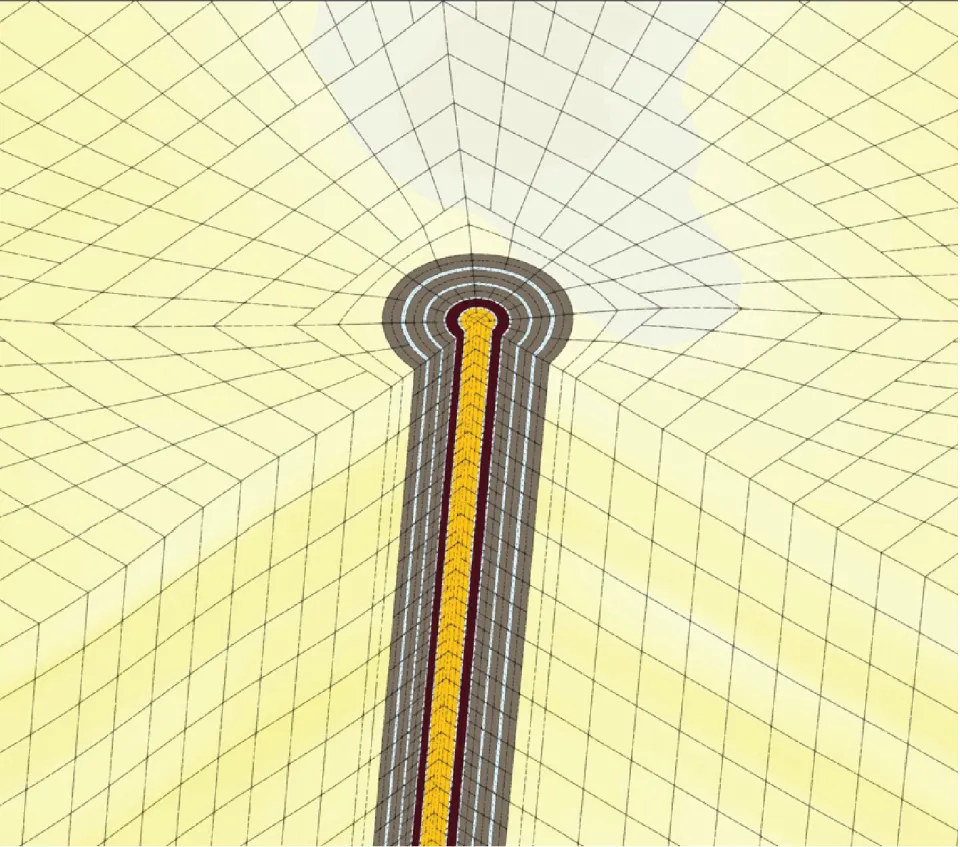
Adaptive Meshing
- Optimal: Concentrates effort where needed
- Automated: No tedious mesh tuning

Fast Frequency-Domain Solver
- Stable: No CFL condition
- Scalable: More than one trillion 3D unknowns demonstrated
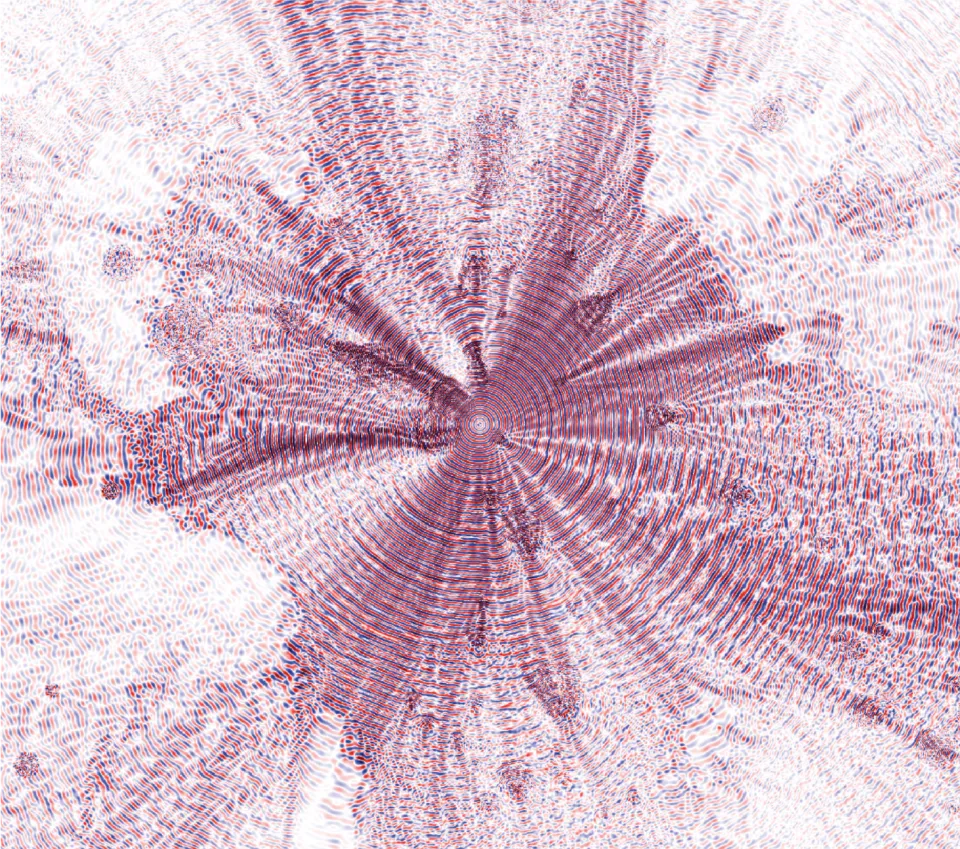
Frequency Domain vs. Time Domain
FrequenSolve enables unparalleled frequency-domain simulation, often >100x faster than leading time-domain tools.
Time-domain simulation is also supported by combining frequencies. This can often be competitive with leading time-domain finite difference codes and is especially competitive in cases with:
- Attenuation
- Anisotropy
- High contrast
- Topography / complex geometry
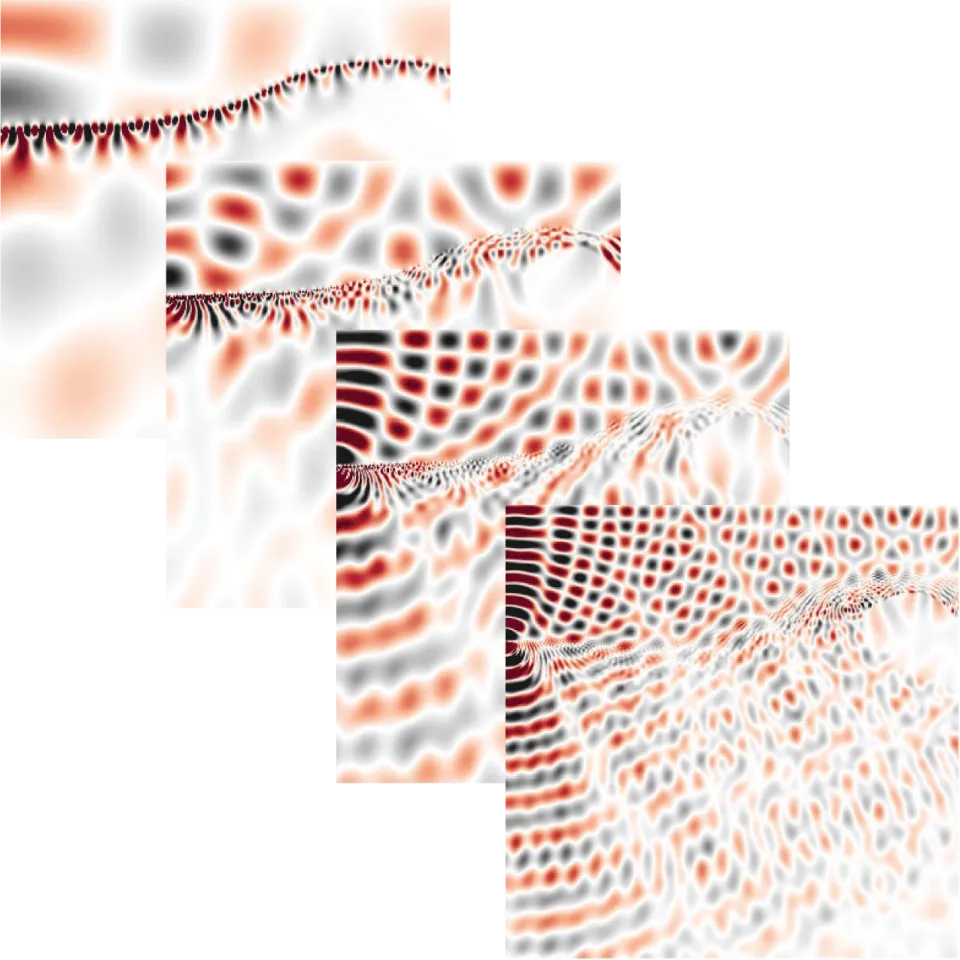
Frequency-Domain
Time-Domain
How it Works
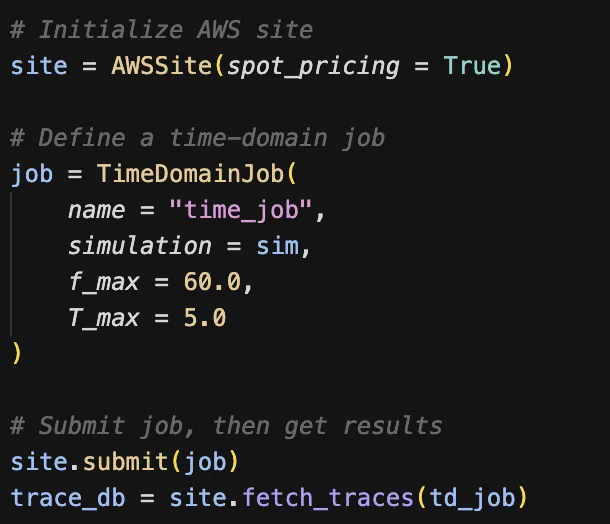
FrequenSolve's intuitive Python interface combines models, acquisition geometries, and data into 'simulations'.
Simulations can be run at various 'sites' where our fast solver code is installed and licensed, including:
- AWS cloud via FrequenSol's API
- On-prem HPC clusters
Simulations can be run in forward, adjoint, and gradient mode, in both frequency- and time-domain.
Results are stored on the cloud or HPC site, FrequenSolve provides secureand convenient methods for retrieving, exporting, and plotting results.
FrequenSolve defines customizable imaging workflows including Reverse Time Migration (RTM) and Full-Waveform Inversion (FWI), or can be used as a modeling backend for proprietary imaging algorithms.
Use Cases
3D Topography Modeling
Model high-precision surface topography directly instead of relying on extensive static corrections.
Explore 3D Topography ModelingFlat topography
Dune topography
Scholte Wave Modeling
Resolve slow Scholte waves across fluid-sediment interfaces with localized adaptive meshes.
Explore Scholte Wave Modeling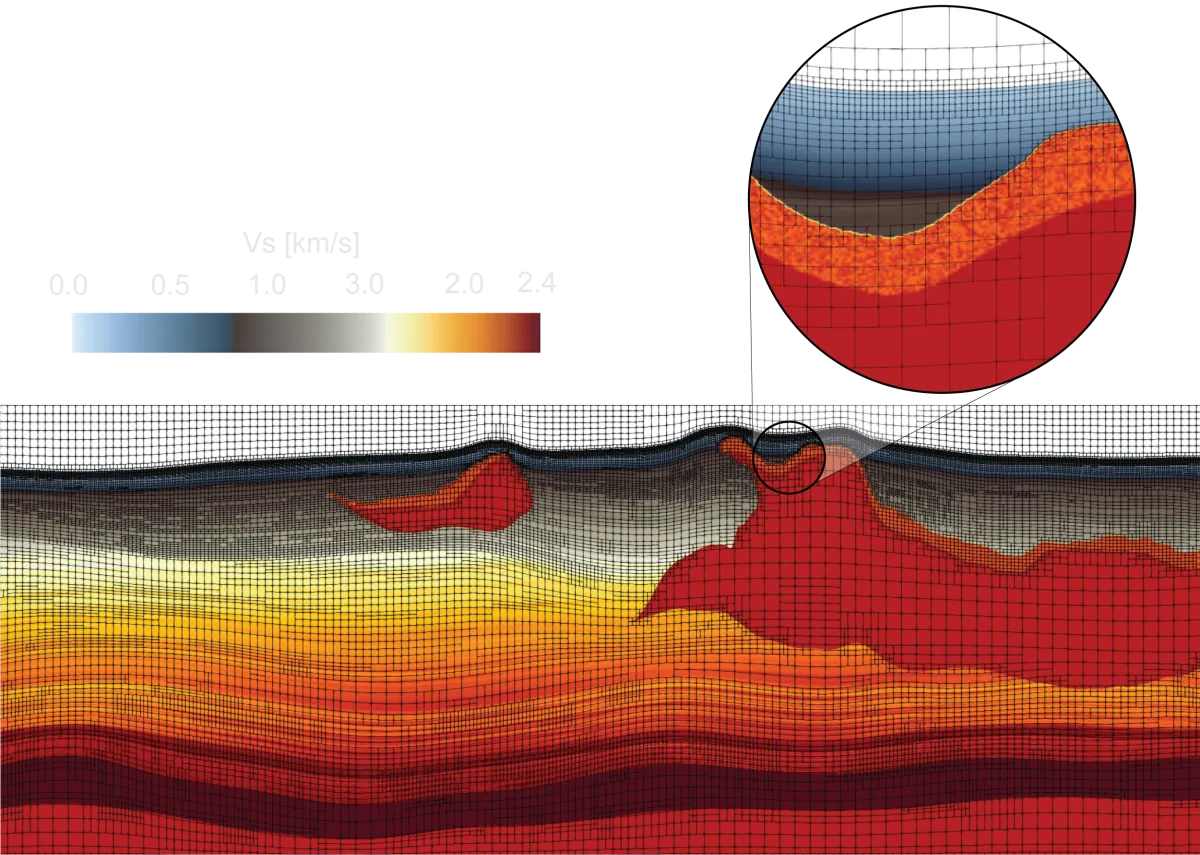
Adaptive interface mesh
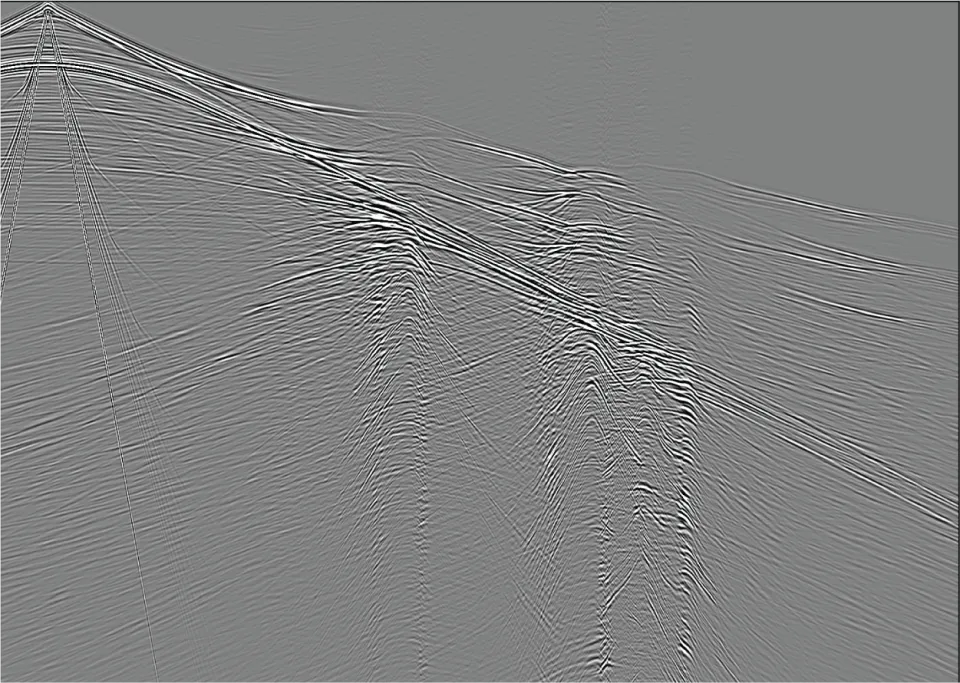
Modeled Scholte-wave data
Seismic Speckle Modeling
Capture scattering from fine-scale heterogeneity in slow, weathered near-surface layers.
Explore Seismic Speckle Modeling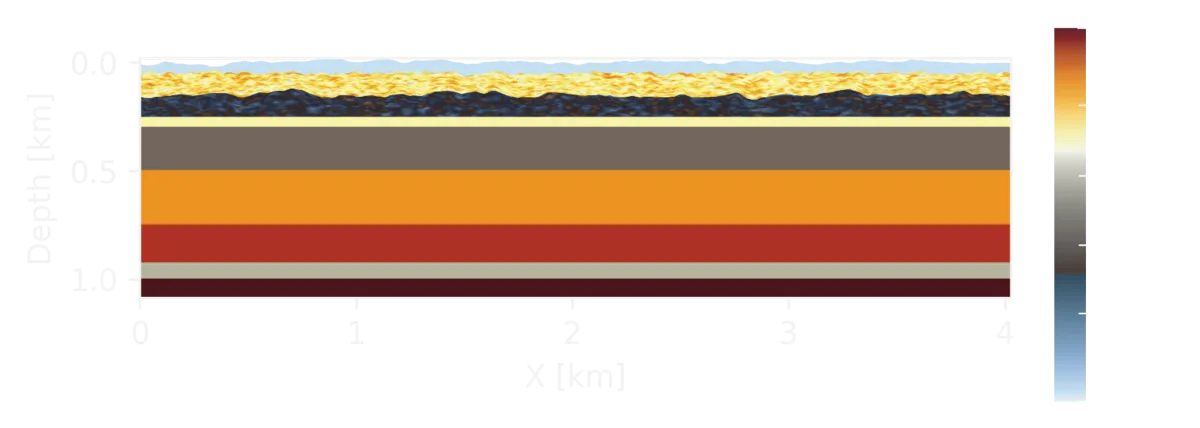
Heterogeneous near-surface model
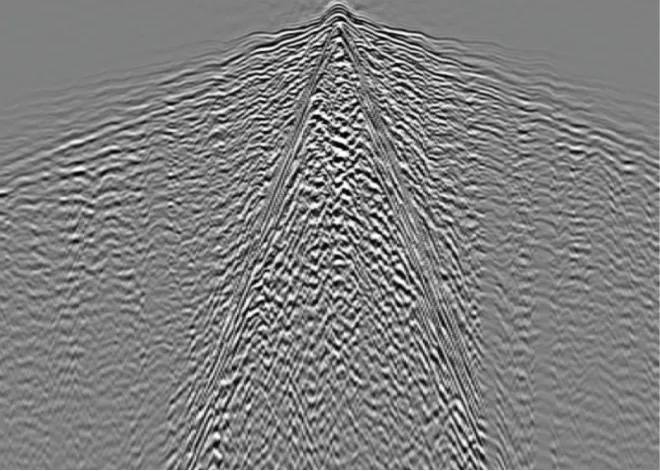
Modeled scattered wavefield
3D Borehole and Fracture Modeling
Represent boreholes and fractures directly to resolve tube and Krauklis-wave behavior in 3D.
Explore 3D Borehole and Fracture Modeling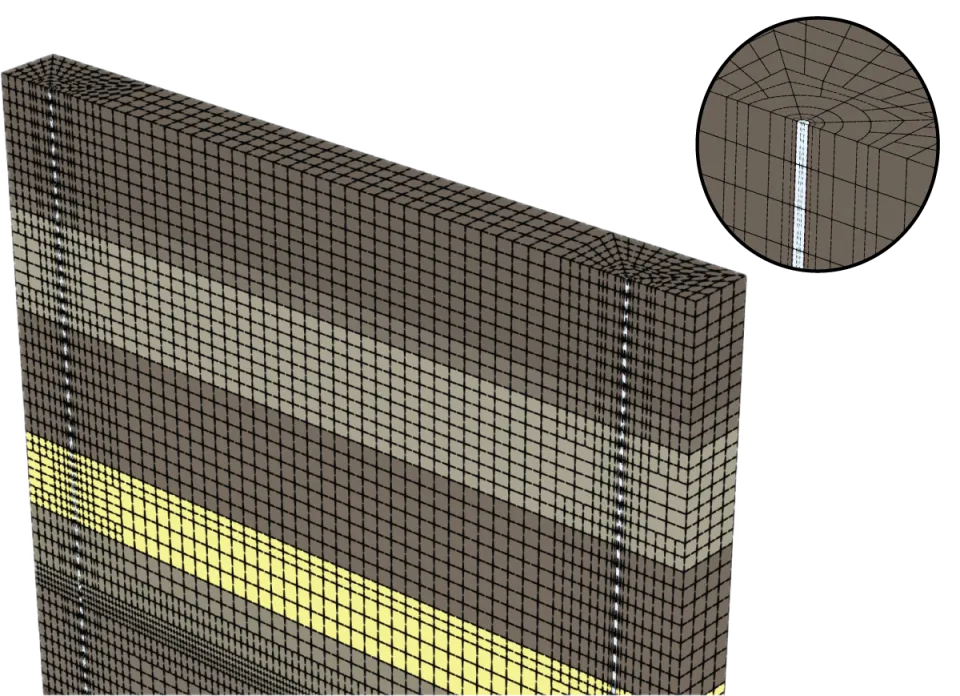
3D borehole finite-element mesh
Features
| Domain |
|
| Dimensions |
|
| Physics |
|
| Modes |
|
| Interface |
|
| Platform |
|